


Anuradhapura – Sigiriya
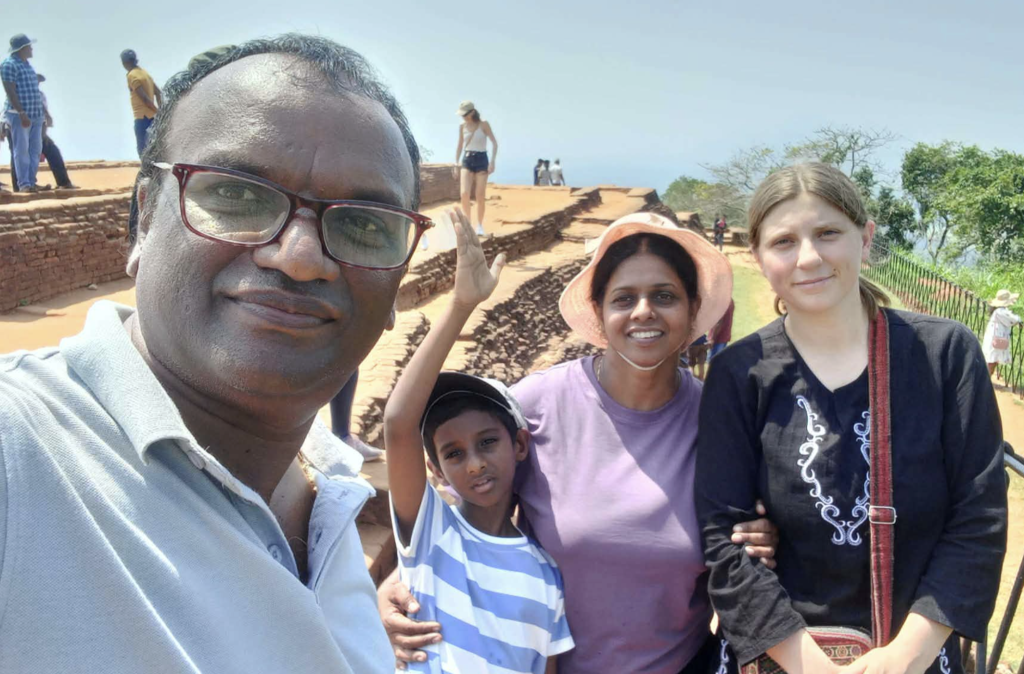
At the beginning of my 6th week in Sri Lanka, we went with Thusil, Nilmini, and Hemil to Sigiriya to visit the famed Ancient Rock Fortress.
Our day began at 5 am, which grandma was not very thrilled about😁
We finally reached Sigiriya around 9 am.
Sigiriya is more than twice as old as Lankathilake and Embekka Devalaya. Sigiriya represents the ancient Anuradhapura period, while the other two are products of the later Kandyan era.
It was already quite busy upon our arrival- little did we know we’d be joining the crowd of many who were also interested in climbing to the top.
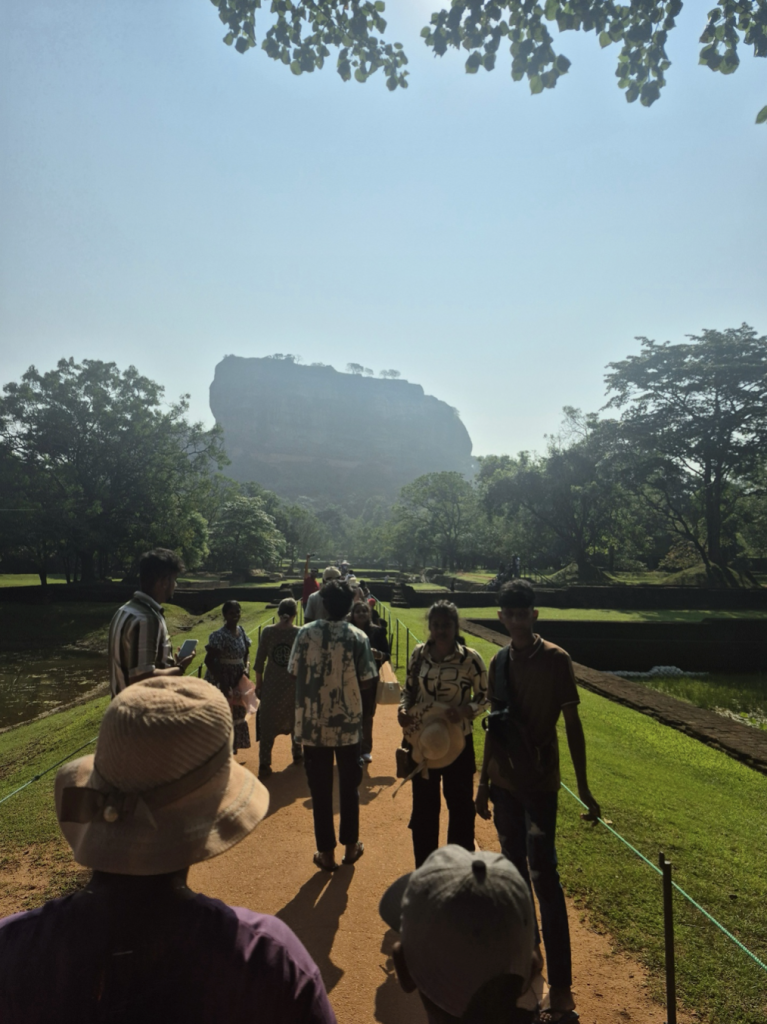
At ground level, a sophisticated moat surrounds the fortress, along with water gardens, a system of pools, canals, and fountains.
Before the big climb, we traversed through terraced gardens and rocky landscapes. The layout combines natural boulders along with manmade landscaping.
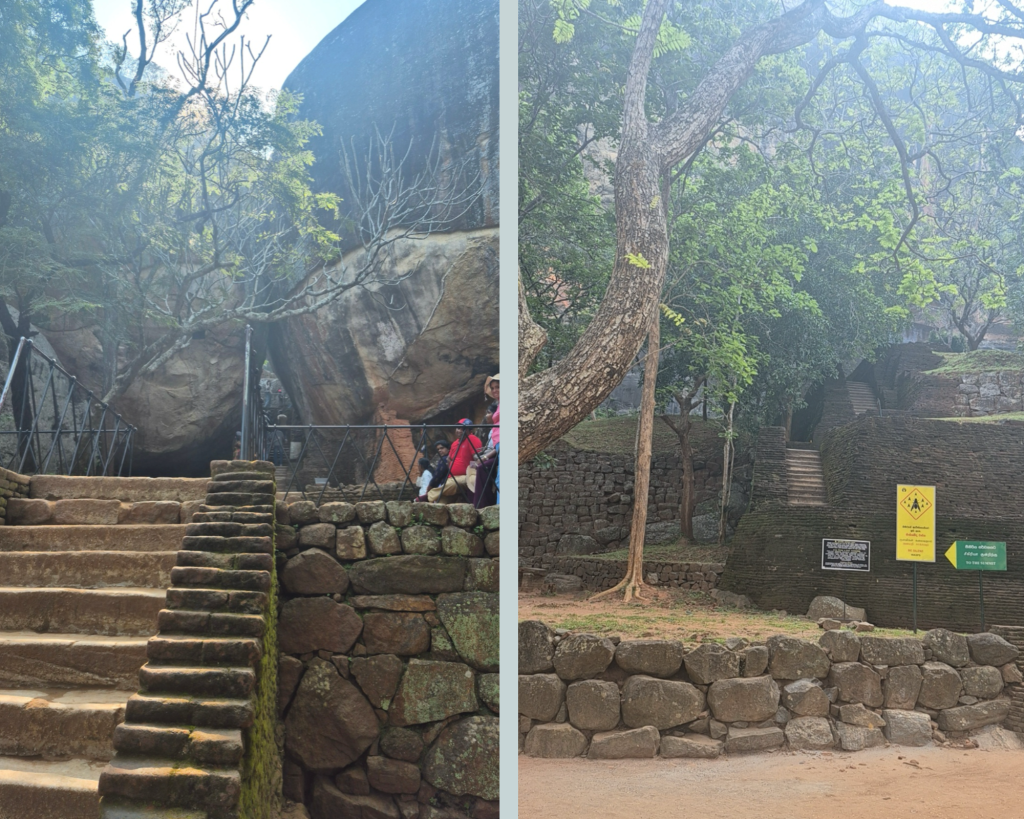
The temperature rose quickly as we climbed up steep steps, along with countless other visitors. We had to take quite a few breaks on our way up.
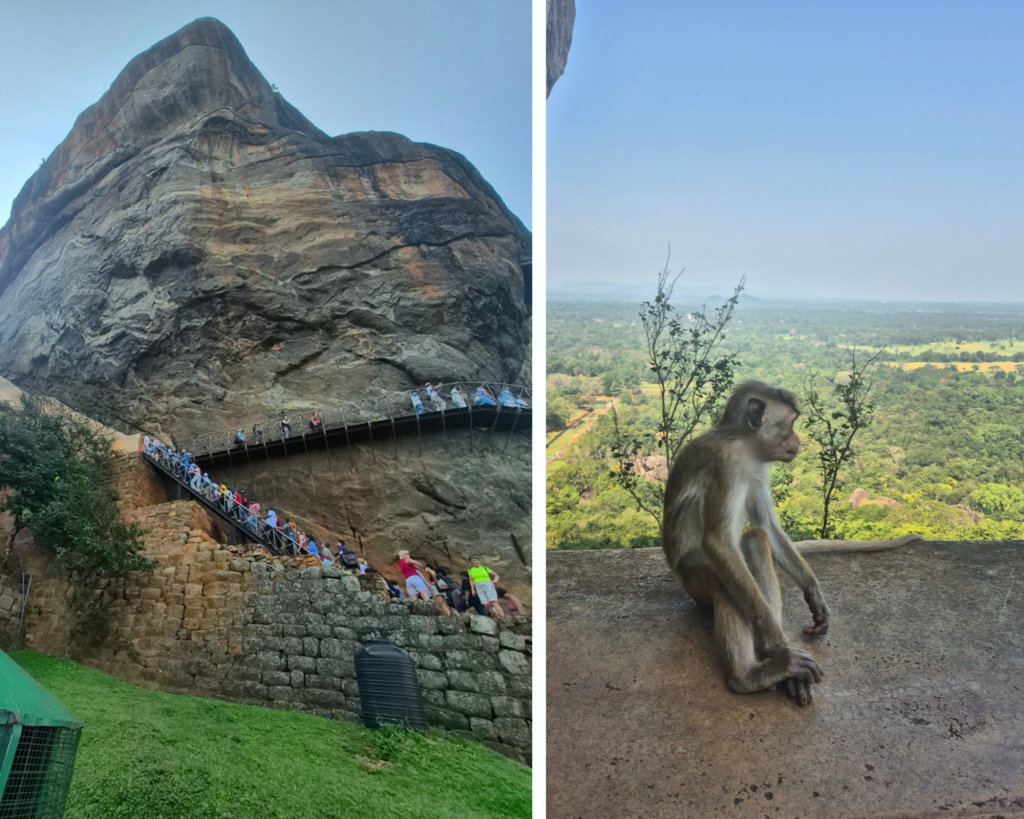
The mid-level entrance to the summit is where the lion’s paws are located, carved directly from the rock. The full lion used to stand here, but now only its enormous paws remain.
The lion represents power and royalty. Entering through the lion would have been a gateway to the King’s realm, symbolizing his strength.
The top of Sigiriya
The top of Sigiriya is essentially a flat plateau approximately meters (660 feet) above the surrounding plain. The plateau covers approximately 4 acres, where the royal complex stood.
From here, you have a 360-degree view of the surroundings, serving both defensive (seeing enemies approach) and aesthetic (showing off the kingdom) purposes.
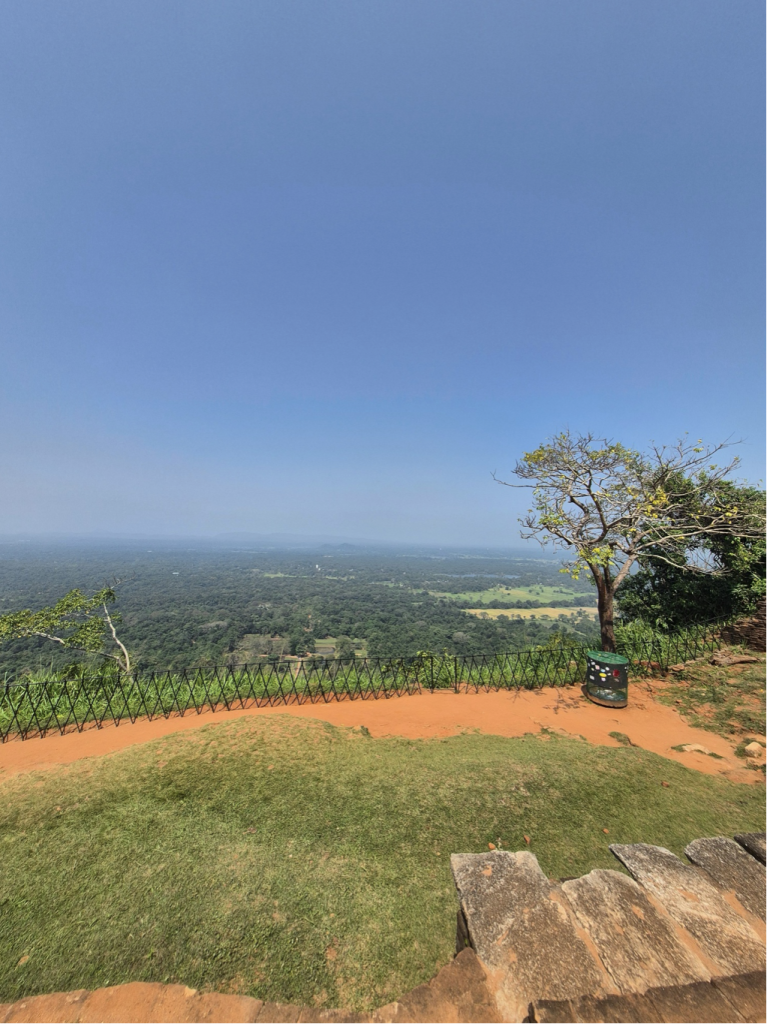
In the present day, there are only remnants of the grand kingdom that stood before.
We observed Foundations of walls and rooms made of brick and stone, bathing pools and cisterns, designed to collect and store rainwater.
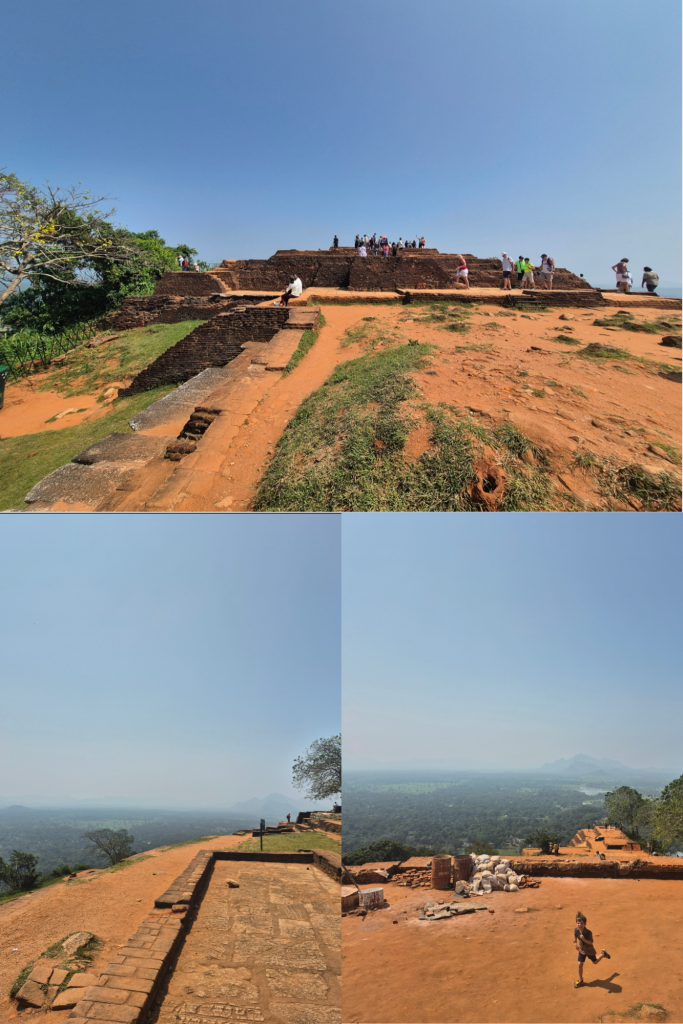
For this, you have to use your imagination a bit, but you have to respect the work and sophisticated techniques it would have taken to build something so grand.
It truly must have been a one-of-a-kind kingdom, with the only entrance via the lion’s paws, then up narrow stairways carved into rock—unlike the modern steps present today.
We were pooched by the time we arrived back on the ground. We thoroughly enjoyed getting back into an air-conditioned car and rehydrating after being in the scorching sun.
Dambulla Cave Temple
Next, we would travel 1/2 hr to Dambulla Cave Temple, yet another display of sophisticated ancient craftsmanship.
Dambulla Cave Temple is the oldest of the four significant sights we visited, followed by Sigiriya, with Lankathilaka and Embekka Devalaya being much more recent.
The caves of Dambulla were naturally formed and allegedly show evidence of prehistoric human habitation. Therefore, before they became a Buddhist site, people may have used them as shelters.
The major transformation into a Buddhist temple happened during the Anuradhapura Era, under the reign of King Valagamba (89–77 BCE).
Murals and statues were added over the course of 2,000 years, reflecting multiple eras of Sri Lankan history.
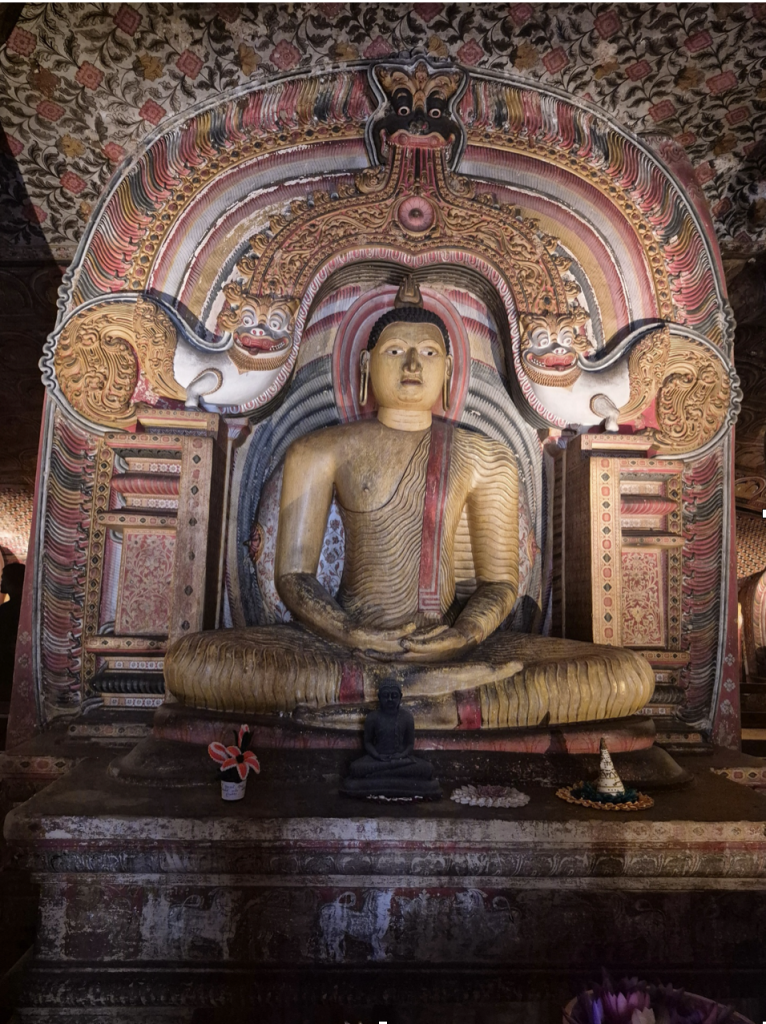
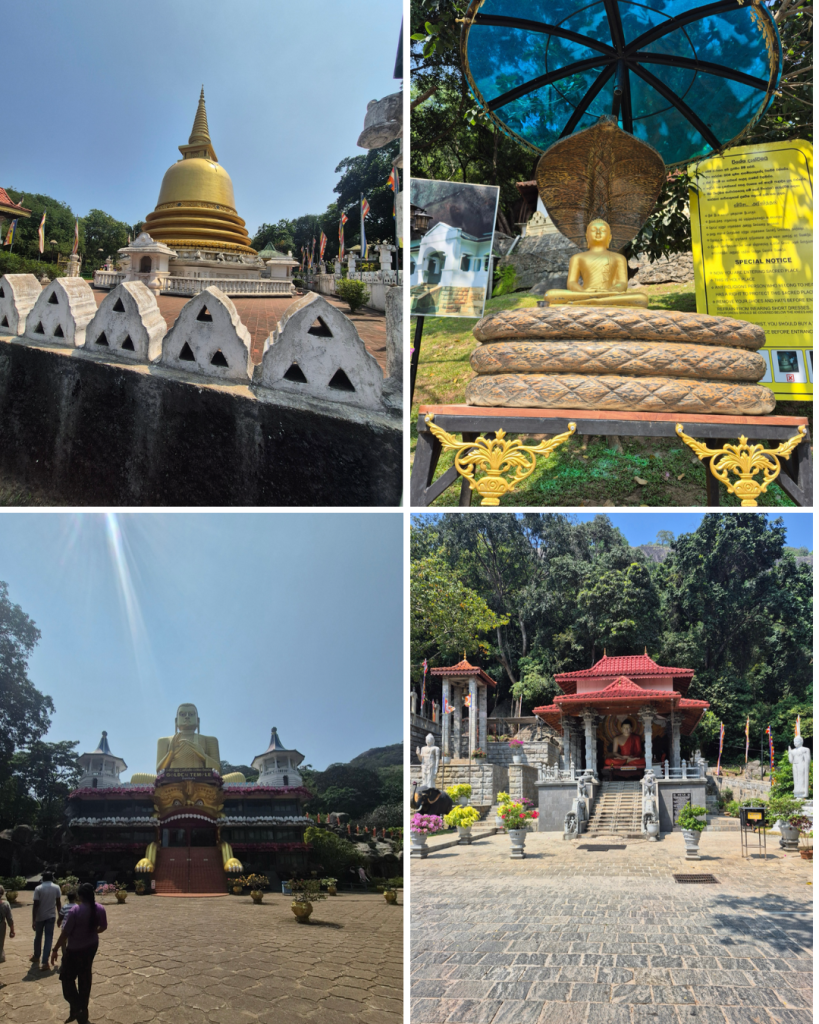
We really enjoyed exploring the temple and its surroundings, but we had to climb a lot of steps to reach it! Our legs would be feeling it in the coming days; rest assured.
After this, we would head towards Anuradhapura. On the way, we of course had to stop for my favorite, Chicken Kottu.
We spent most of the drive napping; we had become so tired from the day’s activities.
When we finally arrived at our accommodation, we were able to rest a little bit. After some much-needed downtime, Thusil, Nilmini, and Hemil invited us to join and visit the temple, as it was the night before Poya (a full moon day).
Full-moon day – Poya day
Poya refers to the full-moon days in Sri Lanka, considered sacred in Buddhism because many significant events in the life of Lord Buddha—such as his birth, enlightenment, and passing away—occurred on full-moon days. On Poya days, Buddhists engage in religious observances such as visiting temples, meditating, and performing acts of merit.
The night before Poya is significant as a time of spiritual preparation.
I don’t know what was more packed that day…Sigiriya, or the temple! It was a beautiful experience, I must admit. Countless people of all ages meditate, chant, reflect deeply on their thoughts, and cleanse themselves spiritually to observe the sacred day fully. It is a night of mindfulness, devotion, and readiness, setting the tone for the holy day ahead.
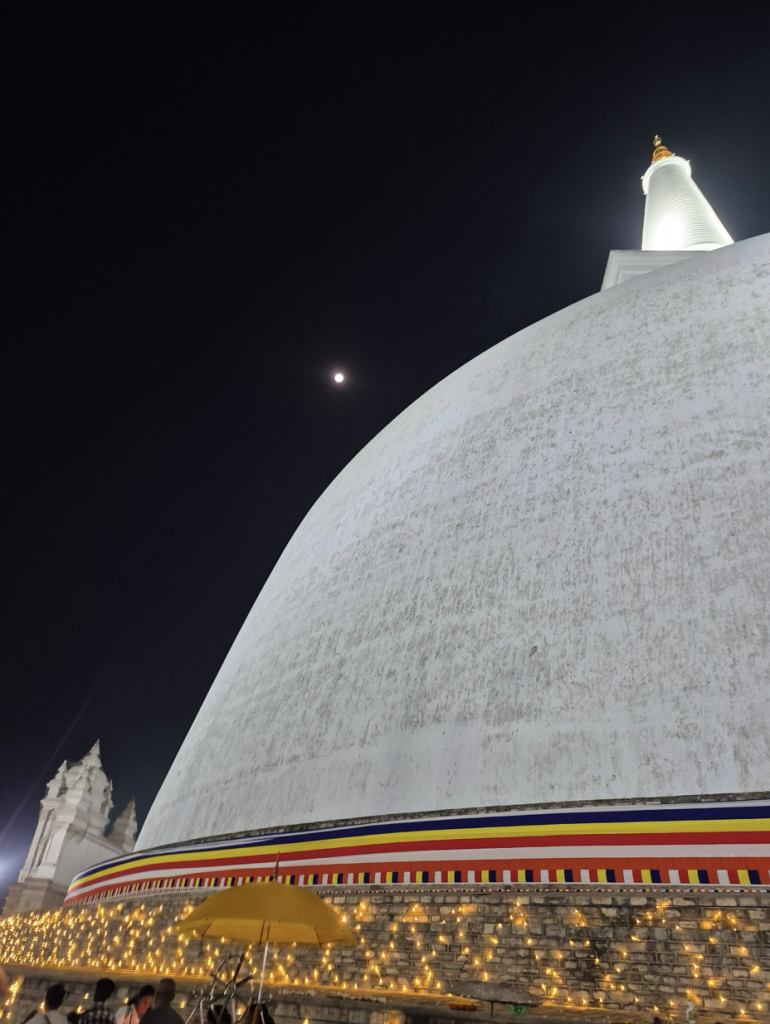

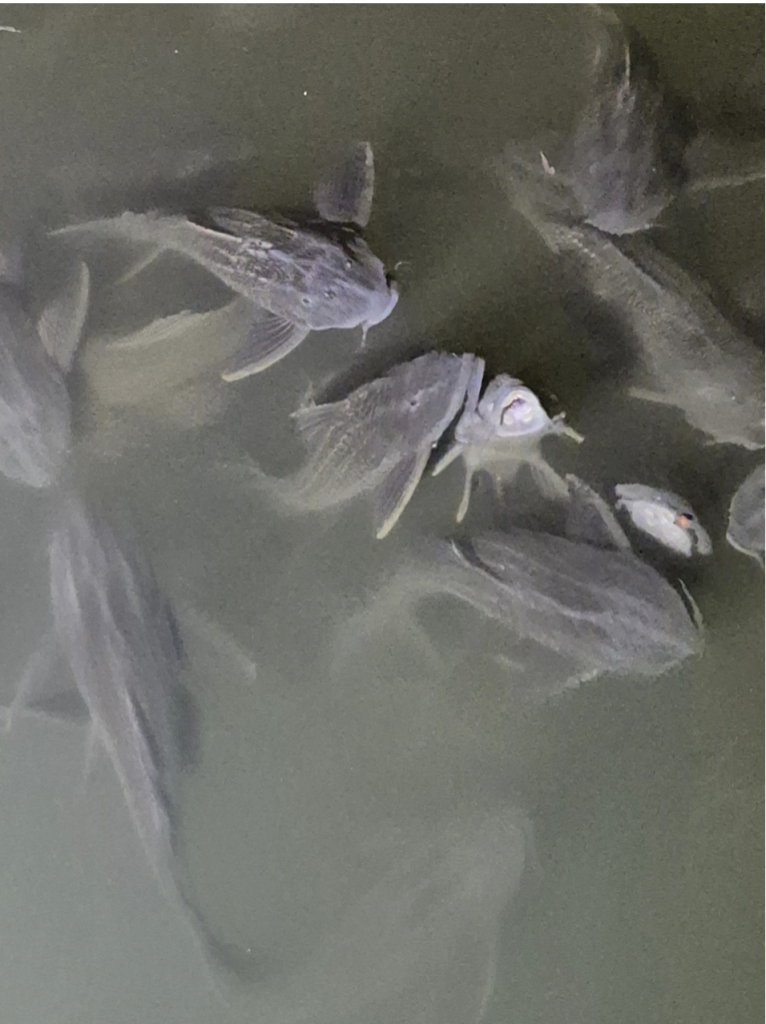
We ended the evening with a delicious ice cream and fruit salad, and watched the catfish in the water put on an interesting display. Needless to say, we all had a very good sleep that night.
The Mango Plantation
The next day, we visited Thusil’s farm. It was quite an adventure; it felt like a back-road adventure with the driver avoiding massive potholes. We saw so many Peacocks on our drive, which I hadn’t previously seen in other places on our travels thus far.
In Anuradhapura and its surroundings, elephants are present. Therefore, families must be cautious and take care to protect their properties and gardens from these creatures. Upon arriving at Thusil’s farm, we also noticed they had completely elephant-proofed the place! A necessary action to protect the mango trees.
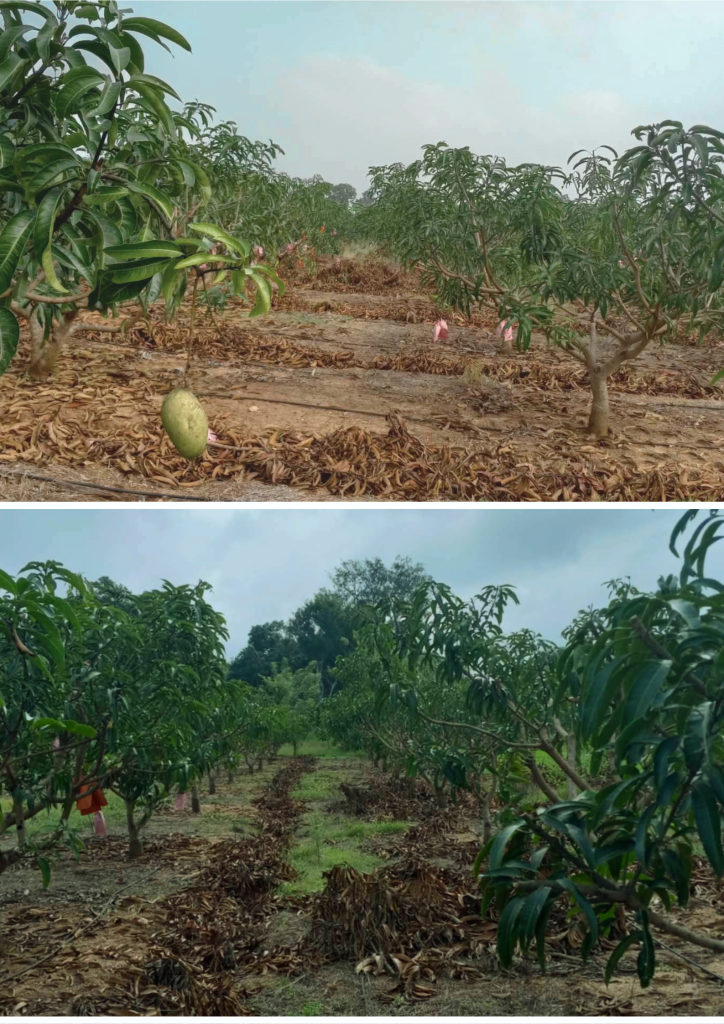
We enjoyed strolling around, observing many mango trees, and the farm workers were kind enough to provide us with boiled waxy corn and fresh mangos for lunch.
Upon returning from the farm, we slowly bid Thusil, Nilmini, and Hemil goodbye, as they would make their way back to Pilimathalwa. We would stay another night in Anuradhapura and continue our journey to the East coast the next day.
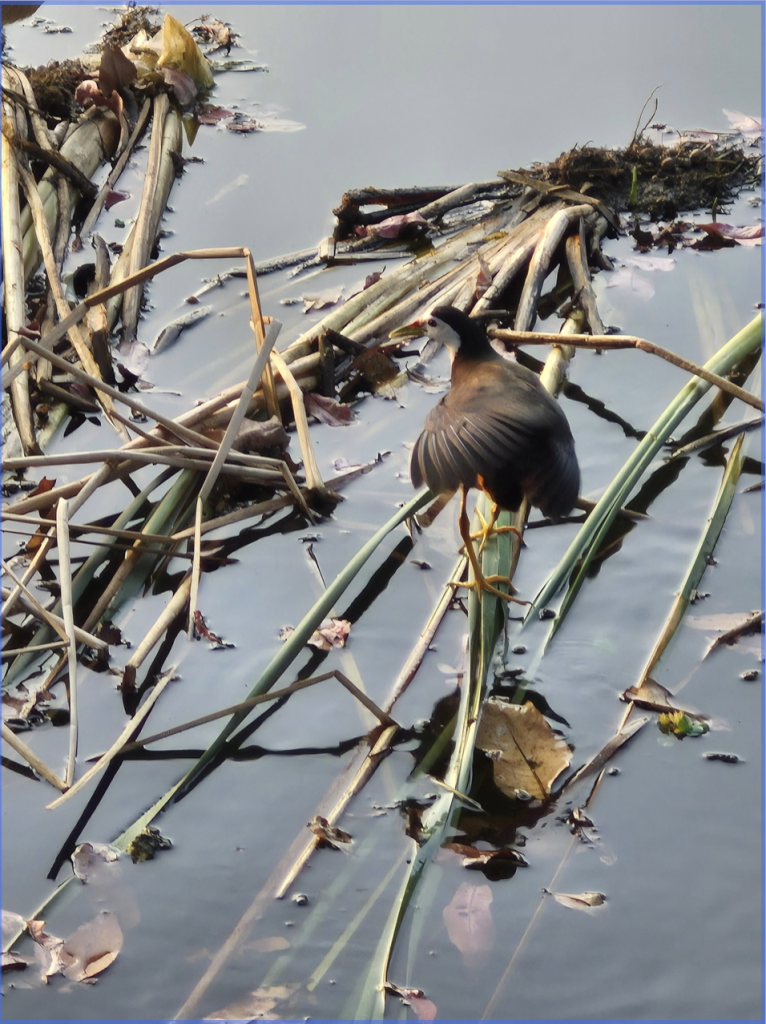
Grandma and I enjoyed a walk around the lake.
The ‘tanks” (or lake, as I referred to it) of Anuradhapura were built long ago, maybe 2000+ years ago, to store rainwater and irrigate rice fields. They demonstrate the advanced hydraulic engineering technology of ancient Sri Lanka. Today, many of these reservoirs still supply water for agriculture. In contrast, their calm waters and surrounding wetlands provide important habitats for waterfowl and other wildlife, turning the tanks into thriving ecosystems alongside historical sites.
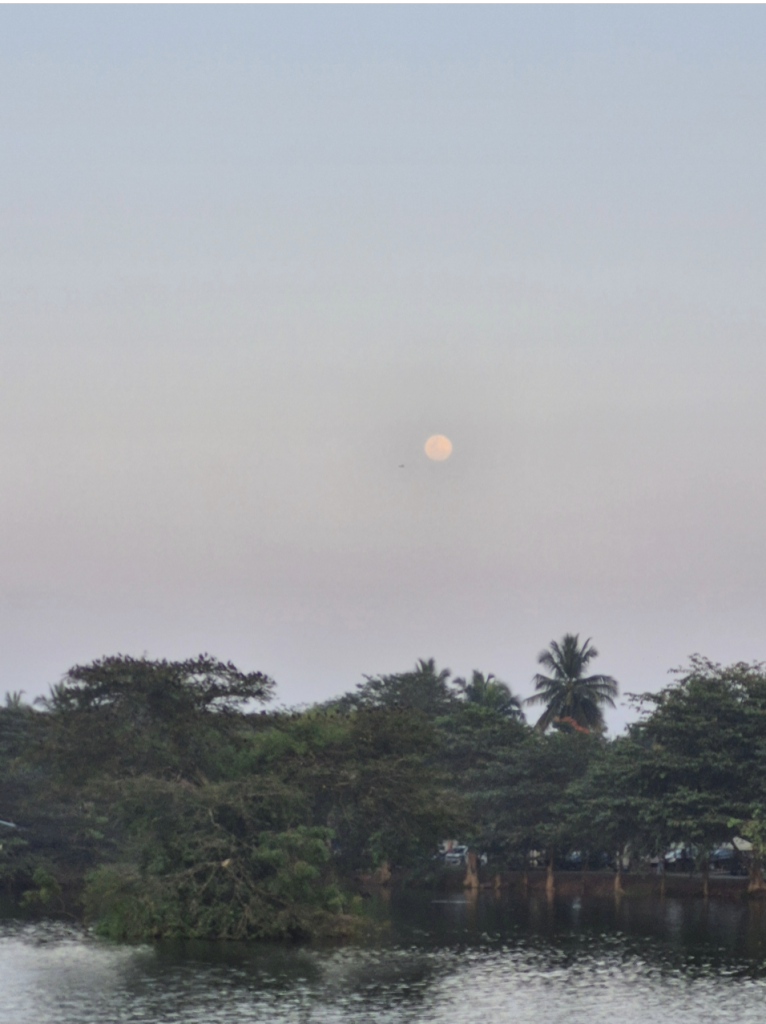
The next day, we could embark on the next leg of our journey towards Trincomalee.
See also Galle and Ambalangoda. And Sinharaja





Fascinating place and beautifully presented. As a photographer, locations like this are especially interesting because the architecture, landscape and history all work together visually. I imagine the changing light across the rock must completely transform the character of the place throughout the day.