
Deniyaya – Sinharaja
Our next destination would be a little further away – Deniyaya -Sinharaja. It was now the beginning of my 3rd week in Sri Lanka.
Our journey began on Monday morning in the quaint, quiet village of Walgama.
We hired a driver, Liyan Tours, to take us 6.5 hours from Walgama Junction to Deniyaya -Sinharaja, our destination, Sinharaja Eco-Villa. We planned to go on a birdwatching tour at the Sinharaja Forest Reserve on Tuesday.
Our driver arrived promptly at 8 am. He was a lovely young man named Sanath. We had a nice exchange with him, and Grandma enjoyed discussing mutual experiences of India. He worked and lived in India for a few years. It was wonderful to hear his experience and perspective. We drove through the winding hills of the Central Kandy District, and he shared a wealth of information about various landmarks.
We truly enjoyed taking in the landscape.
When we arrived, we thanked him for his time and for getting us safely to our destination.
We were greeted at the Eco-Villa by Achintha, who was very friendly and accommodating. Achintha is the son of Bandula, who is the owner. We would meet him later in the day. The eco-villa is a beautiful, quiet, and peaceful property with lovely garden landscaping. We decided to have dinner there that night, and we did not regret it. It was cooked with love by Bandula’s wife. We received a large serving of rice, along with many sides and sauces to add to the rice, which is grown by Bandula in his paddy field. It was truly heartwarming to have an authentic Sri Lankan home-cooked meal.
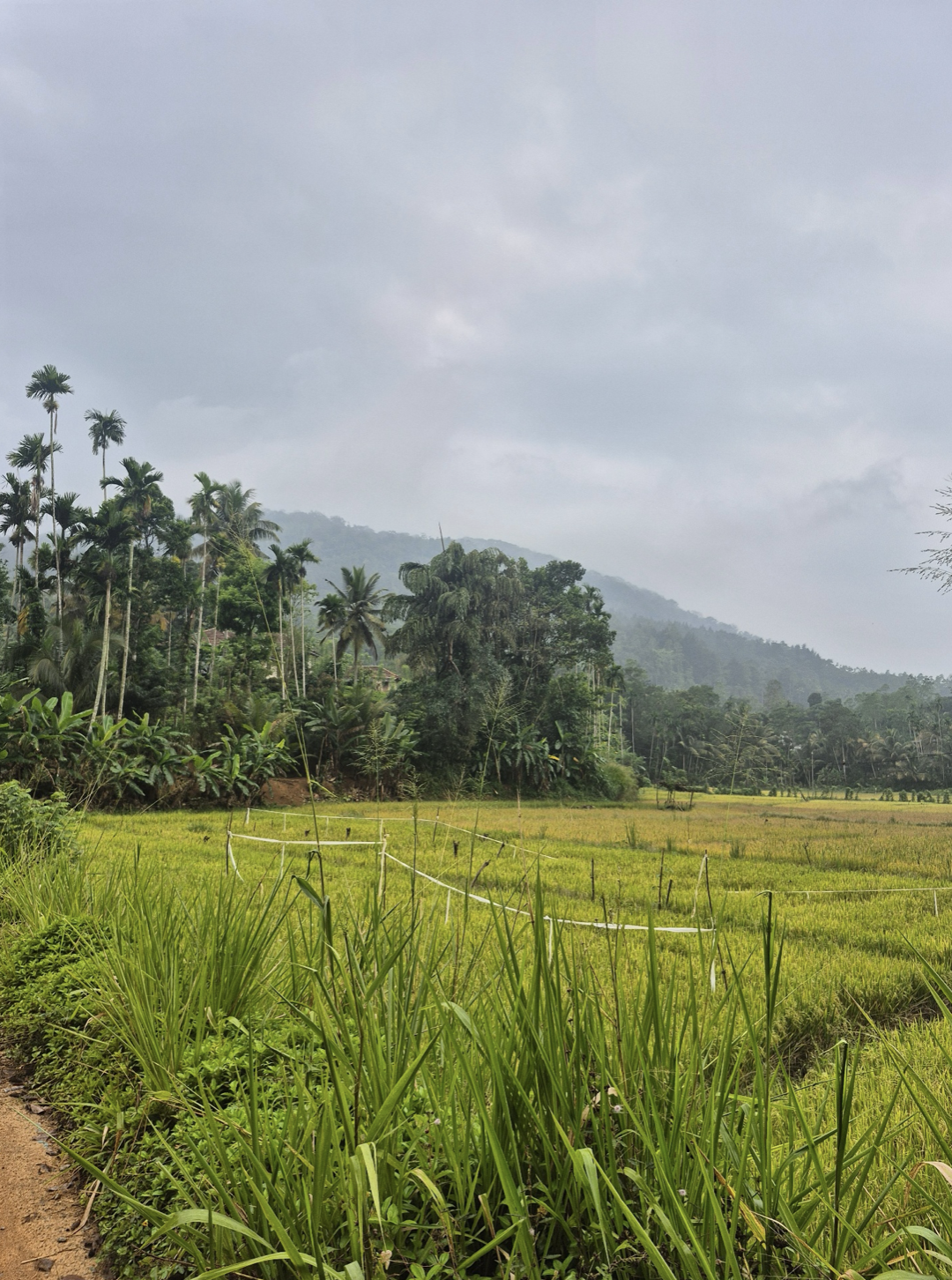
That day, we had also enjoyed a small walk in Deniyaya.
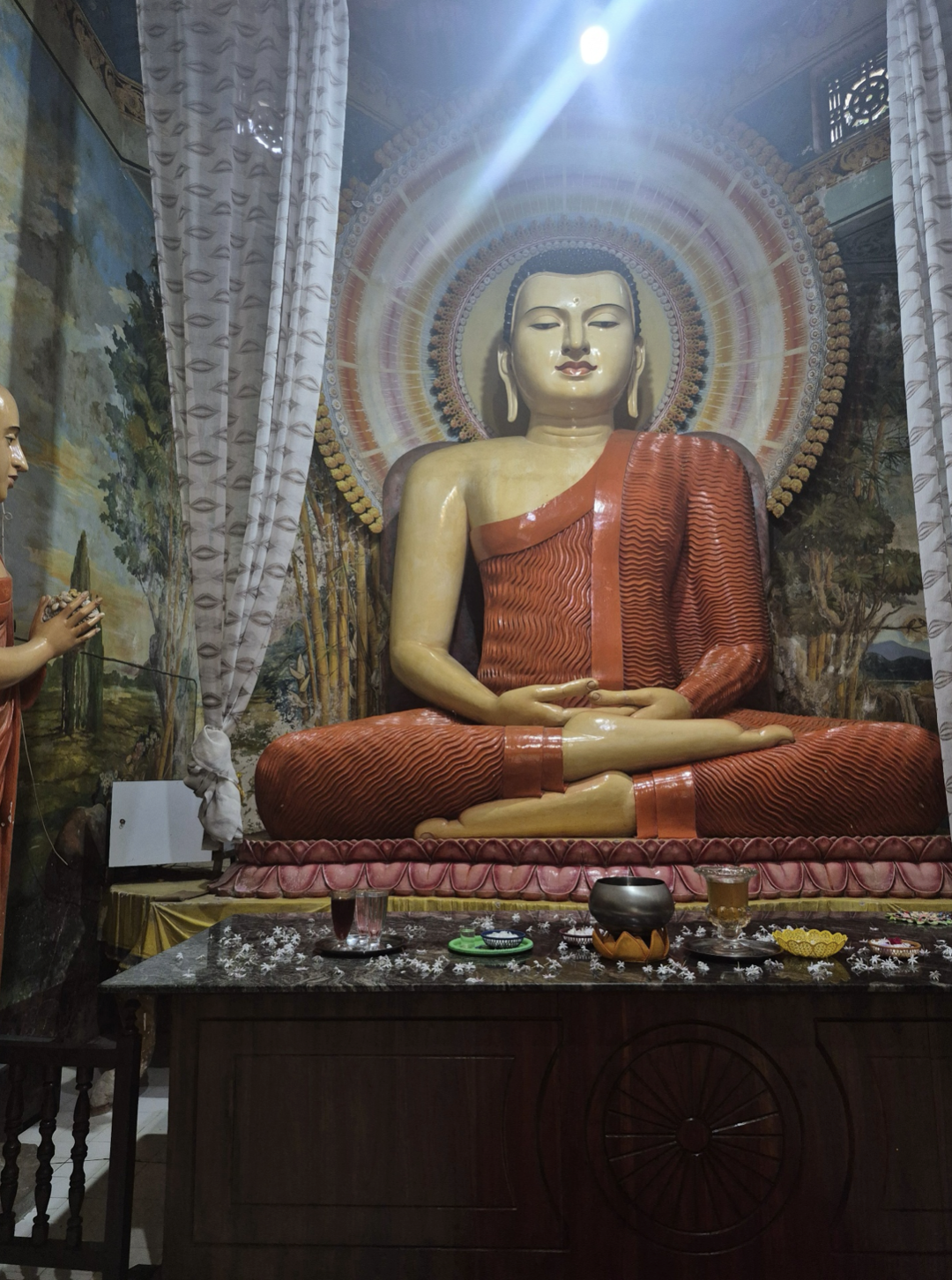
We also visited the Buddhist temple, where we met a kind monk who was very excited to show us around.
Birdwatching tour at the Sinharaja Forest Reserve
The next morning, we would have to be ready for a tuk-tuk to pick us up at 5.15 am,
We would have to meet the birds on their schedule, not ours. Grandma was not very impressed with having to get up so early, but we had a very adventurous tuk-tuk drive, which was certainly bumpy enough to wake anyone up.
On the way, we picked up our tour guide, Danu, who was very enthusiastic. He immediately dragged us out of the tuk-tuk
to observe a very small, green snake, snoozing in the flora along the cliffside.
We were excited to see what Sinharaja had in store for us.
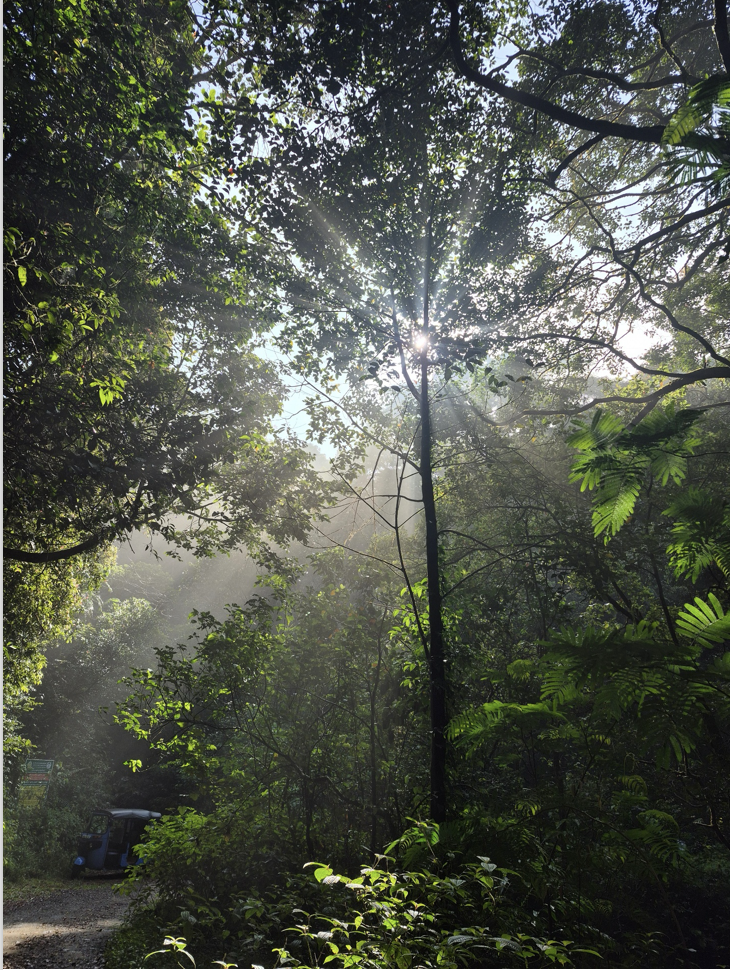
About 1 hour later, we were very grateful to reach the top just as the sun was rising. The road up, as mentioned before, was very primitive 😁
We had one hard stop on the way up to observe our first bird stationed in the middle of the road, one lone Indian Pitta.
We arrived at Samangala Jana Wijaya Chethiya, a small Buddhist temple on the beaten path.
We put on our leech guards as we keenly anticipated our second bird, the famed Sri Lanka Blue Magpie, an endemic species with the majority of the remaining population residing within/around the Sinharaja Forest Reserve.
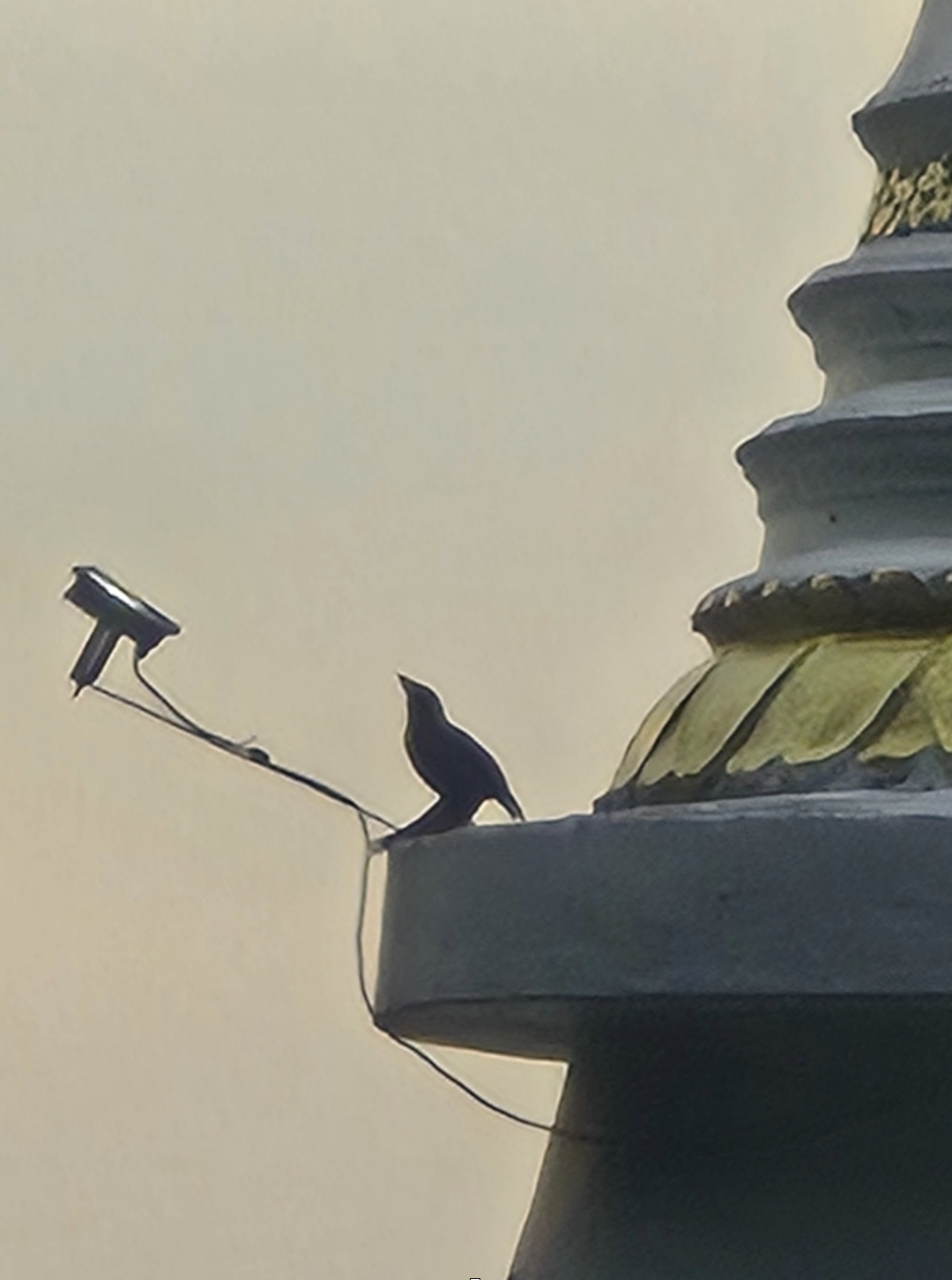
It was truly a magnificent, majestic bird to observe. I wish I could share the sight with you, but this is all my phone managed to capture.
 Sunrise
After enjoying the Magpie’s presence and observing a few other birds that came around, such as a pair of Malabar Trogon, we began our trek up the beaten path, this time on foot.
On our way up, we observed Orange-billed Babblers, which are in the same family and therefore very similar to the noisy Yellow-billed Babblers in the village, although there are differences.
The Orange-billed Babbler is an endemic species found in the wet rainforest understory of Sri Lanka, while the Yellow-billed Babbler prefers more open scrub, gardens, and cultivation throughout Southern India and Sri Lanka.
We also observed a Lesser Yellownape in the same area, a very beautiful, medium-sized woodpecker. However, it was difficult to view through binoculars, given the angle of the sun still rising.
The path we took was bordered by lush tea plantations, which were very charming in the morning light. Through the next patch of forest, we observed a spot-winged thrush, displaying behavior similar to that of the migratory wood thrushes I have observed in Ontario Provincial Parks.
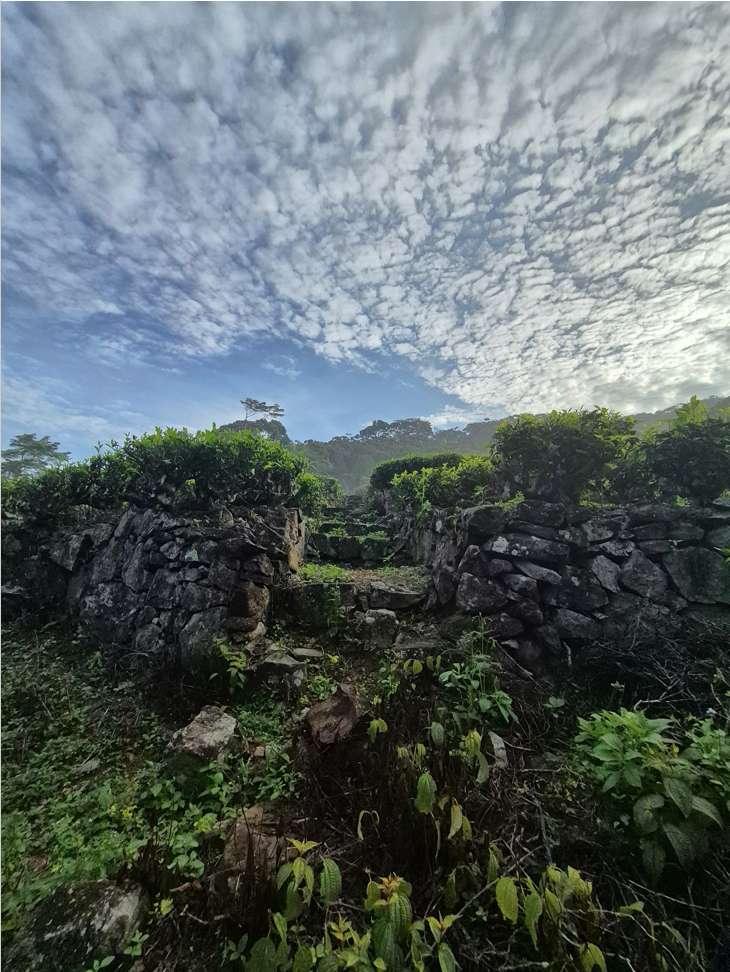
As we continued, Danu informed us that one of the plant species along the path was also an invasive species: Clidmia hirta, commonly known as Koster’s curse or soapbush.
Thriving along forest edges, canopy gaps, and trails, this plant species outcompetes native biodiversity. Similar to Buckthorn in Canada, it is notably hard to remove due to its rapid regeneration and high adaptability, forming dense thickets.
It is a threat to native flora in the forest reserve, disrupting ecological balance.
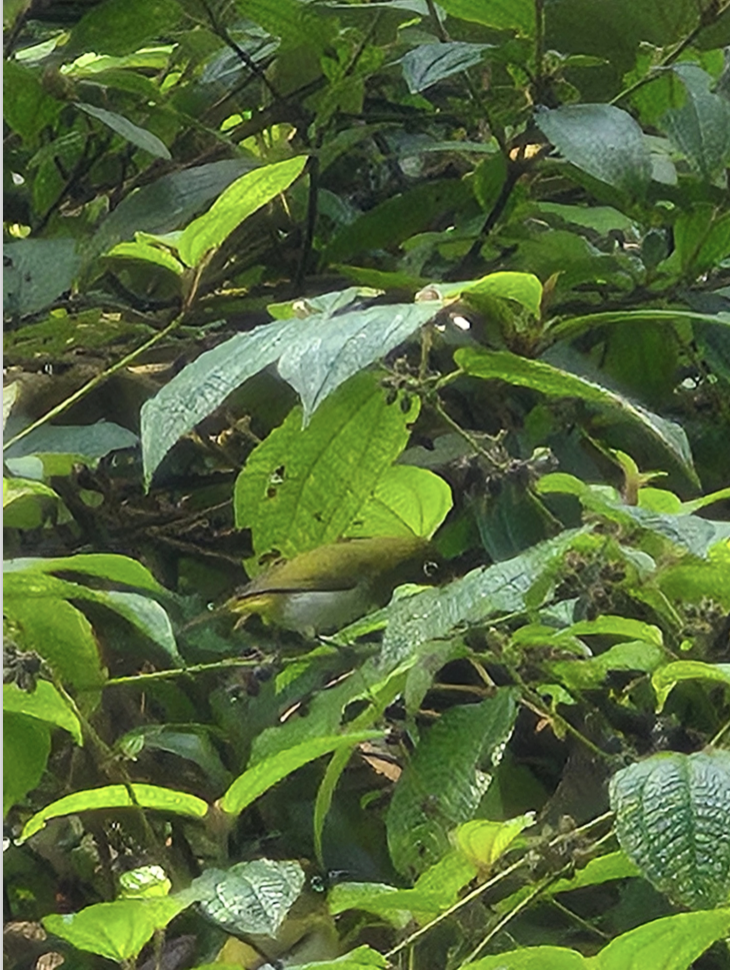
As we walked, we noticed one particular bird that was enjoying the fruits of this plant- the Sri-Lanka white eye. When they eat the fruits, they also contribute to the spread of seeds through waste.
A family on the jungle path
As we wandered down the path, shortly before a small rest, we passed a family with young children making their way through the shortcut paths through the dense jungle. Danu informed us that they walk 13km a day just to bring their children to daycare. It truly showcased the perseverance and resilience of the Sri-Lankan people.
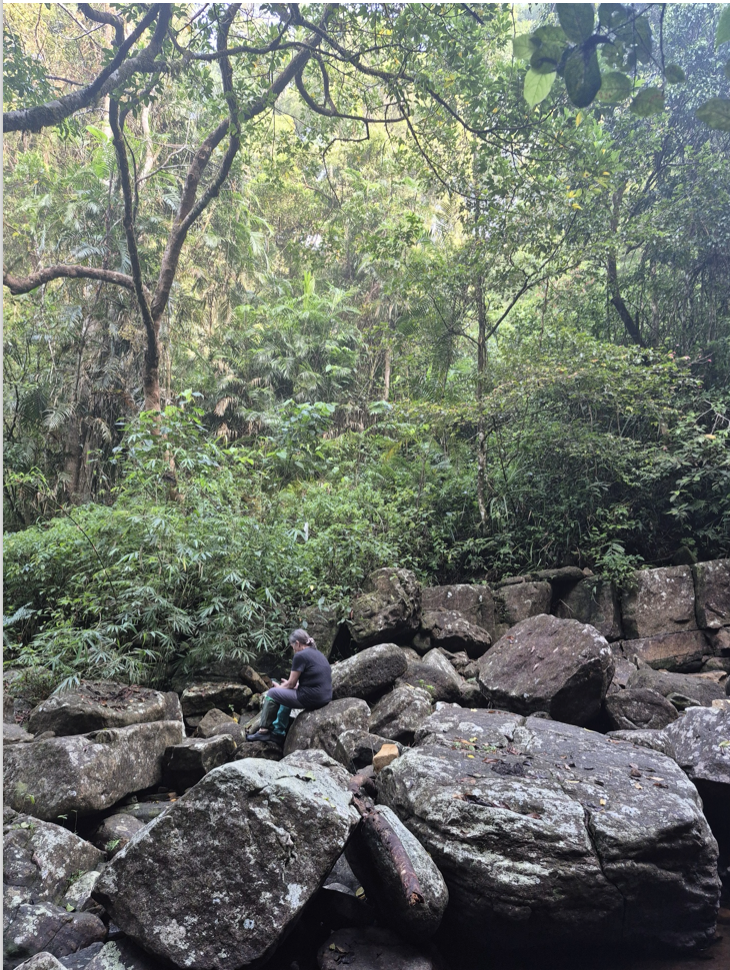
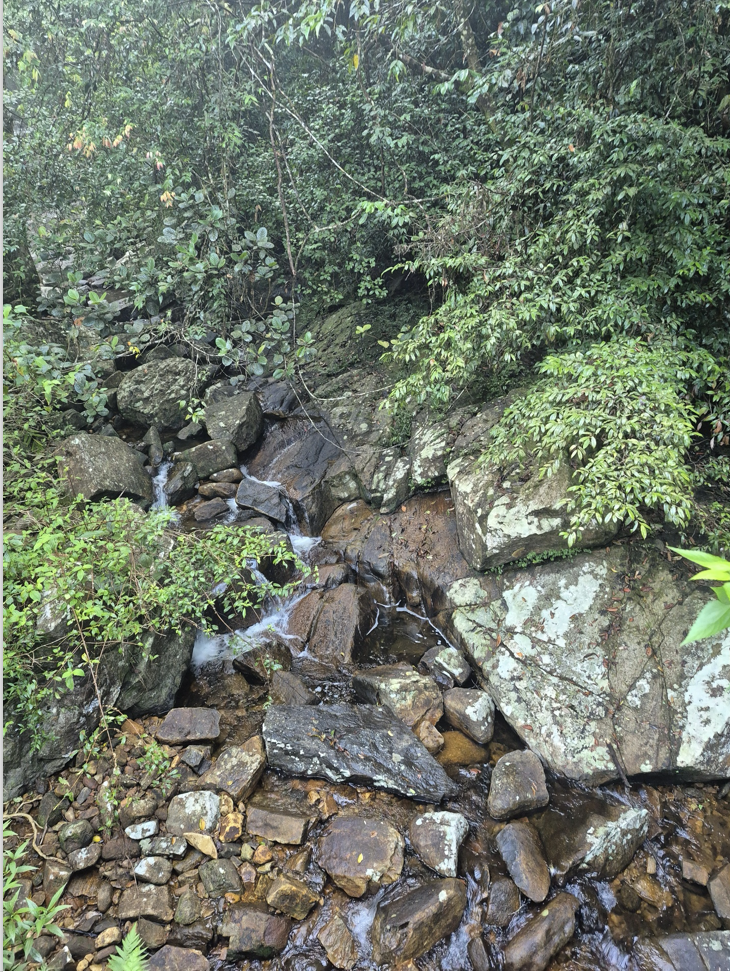
Halfway through our walk, we stopped at a small waterfall to enjoy lunch the tuk-tuk driver had delivered: bananas and a small sandwich. It was very peaceful and refreshing. I also got a small pedicure from the fish in the stream.
After a small rest, we continued our journey. We caught a glimpse of monkeys swinging through the canopy, which we would observe more clearly later. We passed another tea plantation and observed many more Sri Lankan White-eyes feasting on invasive berries.
Tea Plantation

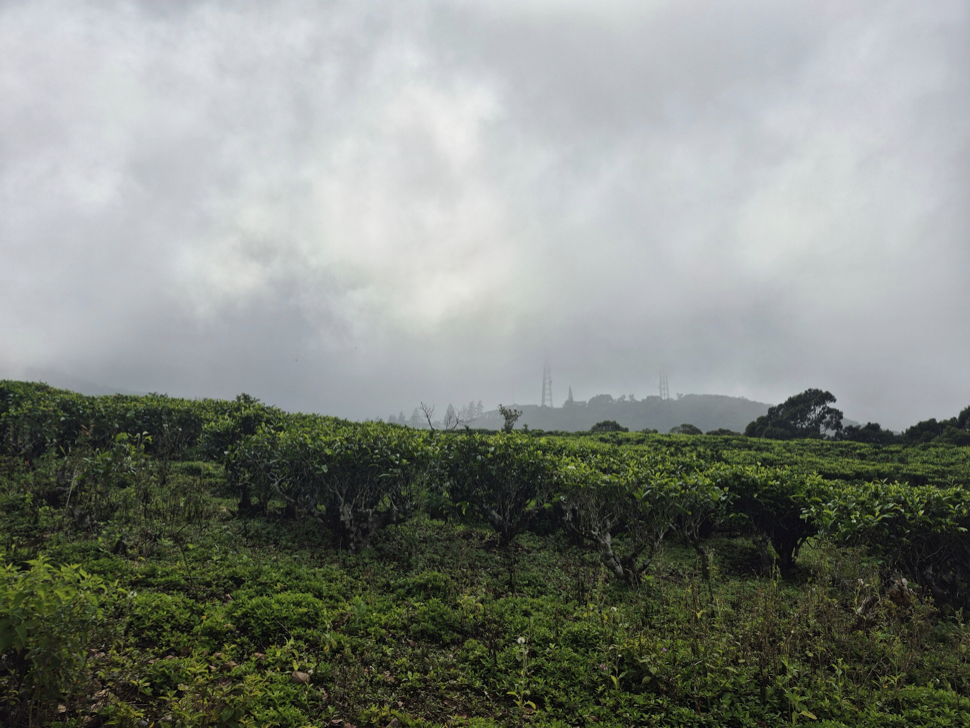
We did not go much further than this plantation, where we observed a Brown Shrike perched proudly in the plantation- its resemblance was strikingly similar to the Northern Shrikes that I have observed in Canada. Other notable mentions were pale-billed flowerpeckers, dark-fronted babblers, ashy-headed laughing thrush, Sri Lanka Drongo, and yellow-browed bulbuls. One of the plant species we observed there also intrigued me- the Tropical Milkweed, Asclepias curassavica, very similar to the butterfly weed, Asclepias tuberosa, in Canada. It is native to South America, and although not native to Sri Lanka, it is a naturalized plant, meaning that it does not cause the same harm as invasive plants.
Naturalized plants are non-native species that create self-sustaining populations without causing significant environmental damage. Invasive plants are non-native, spread rapidly, disrupting ecosystems and causing ecological damage.
Journey completed – on the way down
With our journey completed, Danu did not waste any time calling our TukTuk driver to pick us up. We were ready to embark on the journey back down the bumpy road.
On our way down, we could see the view in full now, which was absolutely breathtaking.

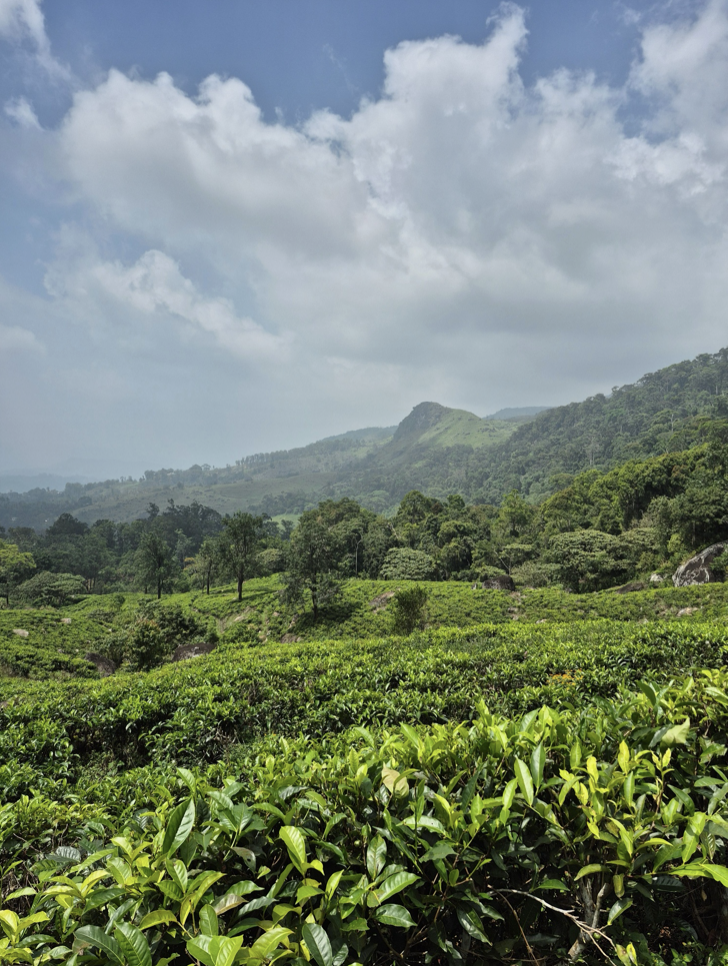
A Tea shop and a goat
We had a small stop on the way down for tea. It was very pleasant to enjoy a tea at the small shack, where the owners lived next door. Grandma was very happy to see that they owned a goat, which was very friendly and hungry!

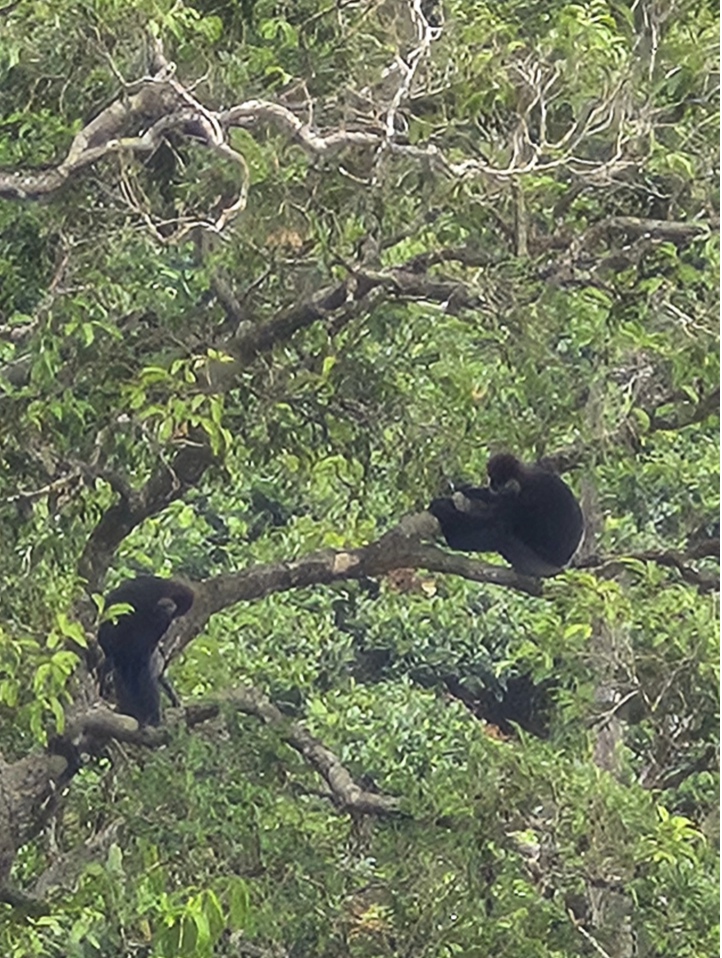
On our way down, we finally got to observe the monkeys we caught a glimpse of in the forest reserve.
They were sitting high in the canopy of a tree, and with binoculars, we got a clear view of the Purple-faced langur, a species endemic to Sri Lanka.
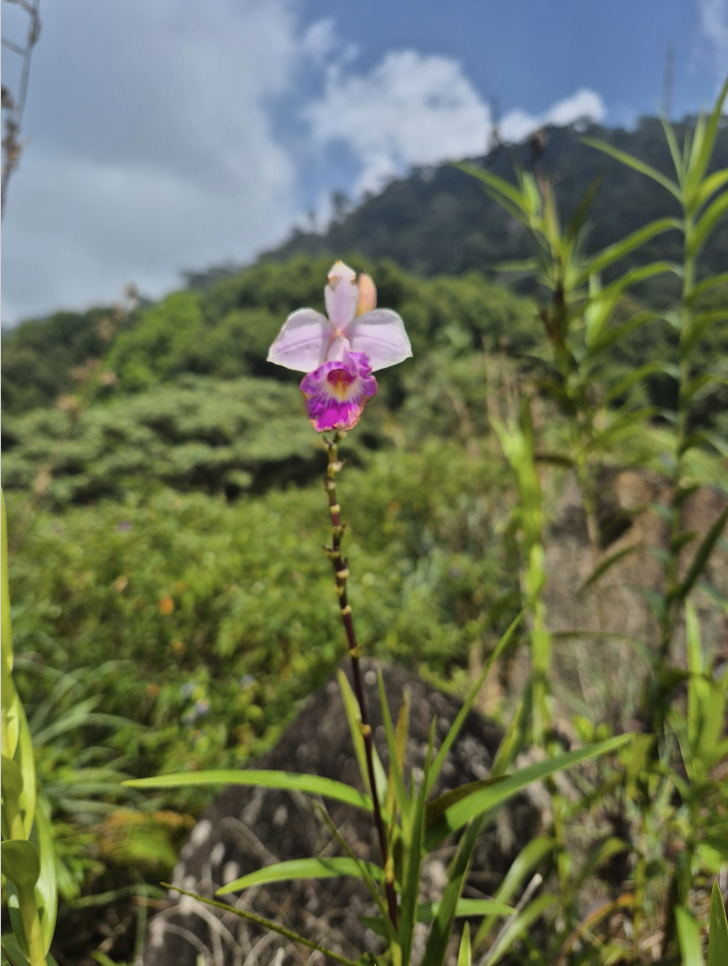
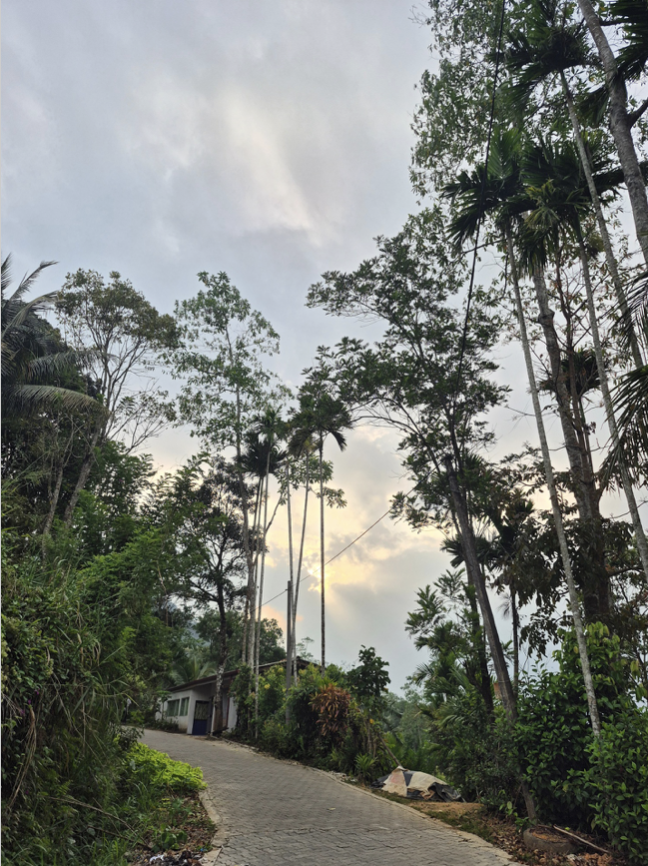
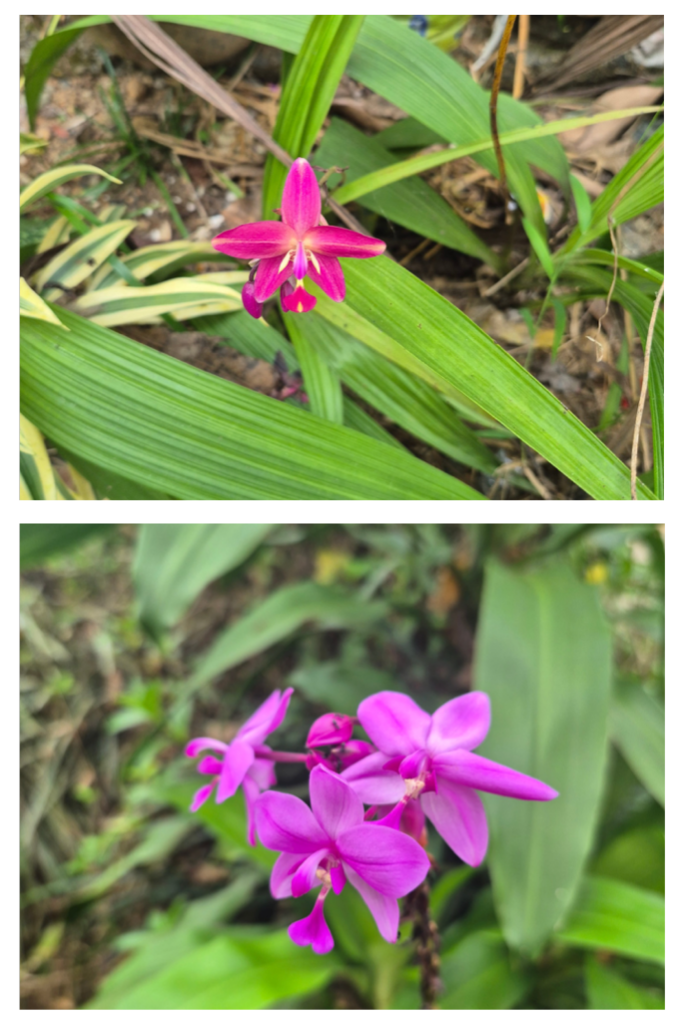
After returning to the eco-villa, we were exhausted but inspired by the beauty of the Sinharaja Forest Reserve. We did not do much the rest of the day, but we were able to enjoy the nature within the eco-villas small garden- observing blue-tailed bee eaters, Indian paradise flycatchers, and white-browed fantails. We did a short walk through the village, where beautiful orchids grew along the roadside.
Our day was concluded with another delicious, authentic Sri-Lankan dinner, with a special dessert, curd, and Kithul honey, which was harvested from nearby Fishtail palms. Finding people who can still harvest this delicious nectar is becoming increasingly difficult, which is a shame.
The next day, we would continue our next leg of the journey to Galle.
to be continued > Part 4




Leave A Comment