
More than usual New Year’s wishes for 2026
“We live in unusual, difficult times.” For a few years now, we have heard these words. The pandemic, climate emergencies, economic turbulence, and an ever-accelerating digital world have tested our patience, optimism, and sense of community.
My Friend Harald Wiesendanger from the Auswege foundation in Germany, also known as Ways Out charity, wrote an article for us to consider and implement. Dr. Harald Wiesendanger, a journalist, founded the Auswege/Ways Out Foundation in 2205. The foundation has since invited up to 60 chronically ill children and their families, as well as adult patients, to its therapeutic summer camps every year.
As the Representative for the English-speaking world, I translate his articles in “Klartext Translated” and help promote the foundation’s excellent, helpful work.
I have translated this article for you because it will also benefit my readers.
So, as we turn the calendar to 2026, let’s try something different. Instead of the standard “Happy New Year!” or “May the year bring you health and happiness,” an article that acknowledges the reality we’re living in. May it contribute to something more prosperous, resilient, and hopeful.
For 2026, we wish you (and ourselves) more than the usual.

Happiness, health, success: this tried-and-tested trio of well-meaning platitudes can be found in virtually all the New Year’s greetings currently landing in your mailbox. Of course, we wish you nothing less—but we also wish you something that will be extremely useful if those New Year’s wishes don’t reliably come true. And they most likely won’t in 2026 either. No streak of luck will last a full year. You could still get sick in the new year. And achieve less than you hoped for.
What will help then? Exactly what we wish for you:
Serenity – an inner calm that enables you to deal with pressure, conflict, disappointment, uncertainty, and other difficult situations in a composed and level-headed manner. The US theologian Reinhold Niebuhr summed up this attitude in his famous “Serenity Prayer”: “Lord, grant me the serenity to accept the things I cannot change; the courage to change the things I can; and the wisdom to know the difference.”

Serenity tends to go hand in hand with misfortune. It shifts the question “Why me?” to “What now?”, from struggling to accepting, deciding, and acting. And it dampens impulsive reactions—accusations, withdrawal, and excessive control—as well as anger and grief. It ends the grueling battle against the inevitable.

Serenity makes illness more bearable. It helps us acknowledge diagnoses and symptoms without giving up; gather information with a clear head, make informed decisions, endure uncertainty, and find meaning in challenging situations. Instead of panicking and despairing over the unchangeable, the serene person focuses on what they can influence and change for the better on their own.

Serenity makes it easier to cope with failure. This is because it decouples its emotional impact from self-esteem and the ability to act. The mistake remains real—but it does not become a judgment on one’s own person. When a serene person fails, they do not sink into self-pity. They do not conclude, “I am incompetent,” but rather, “The plan did not work out (this time)” or “The strategy was inappropriate.” Without serenity, the mind often replays the mistake over and over again: What should one have said, done, or recognized? Such rumination loops create secondary suffering and block problem-solving. The serene person asks the right control question: What was within my power? What were the framework conditions and coincidences? This prevents self-flagellation and excuses, leading to a fair assessment of responsibility.
Serenity prevents us from doggedly chasing success when it fails to materialize or falls short of our expectations. The serene person questions what they are striving for. They don’t ponder, “How can I get this?” but ask themselves, “Do I really need it?” And they don’t collect expensive things; they collect priceless moments, experiences, and memories. They reflect on how they live their lives. And they realize that they can only find happiness along the way—not just where the path ends. They consider what ultimately matters and understand the philosophical meaning behind chess: when the game is over, the king and the pawn end up in the same box.

The calm person reacts later, but better. They let insignificant things pass. They see clearly what is happening instead of letting themselves be overwhelmed by it. And they brood less, analyze more, and make more informed decisions. They can say “no” without having to justify themselves. They can tolerate uncertainty without immediately “researching it to death.” And they concentrate on the essentials. They are not weighed down by a heavy heart, but rather dominated by a clear head. Being calm does not mean “I don’t care about anything.” It means maintaining inner peace in order to act wisely, rather than resorting to knee-jerk reactions.
Only serenity creates the mental space in which wisdom can prevail. For wisdom to flourish, it needs distance: a change of perspective, self-observation, and the ability to endure ambivalence. Serenity dampens inner agitation—fear, anger, shame—in which rapid patterns dominate: attack, flight, justification. It promotes calm reactions. Wisdom always includes a measure of humility: “I may be wrong,” “I don’t know everything,” “Some things take time.” Wisdom recognizes that 2026 is the first year of the rest of our lives. There is no better time for a fresh start when it is long overdue—and for much more gratitude if, on the whole, everything can happily remain as it is.

How can you achieve greater serenity? It rarely comes about through a single inspiring “mindset phrase.” It requires two skills, both of which can be systematically trained. Psychologists refer to them in their usual technical jargon as, first, emotion regulation: perceiving feelings without letting them control you. And second, control competence: clearly distinguishing between what can be influenced and what cannot.

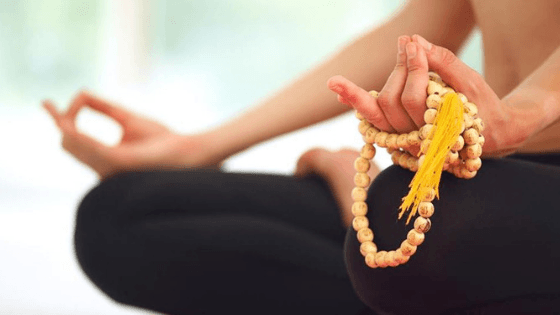
Zen helps develop both: a spiritual practice founded by Chinese Buddhists a millennium and a half ago. Here, “serenity” results from mental self-discipline that makes one internally independent of excitement and attachment. In Zen, we practice repeatedly to perceive thoughts and judgments, as well as anger, disappointment, euphoria, and other emotions, without getting caught up in them—to encounter them calmly, rather than dramatizing or reacting to them reflexively.
This does not mean “feeling nothing,” but feeling without holding on. Hearing criticism without immediately striking back. Noticing stress without immediately numbing it. Focusing the mind instead of letting it jump around like a drunk kangaroo. Being mindful in perception and action, completely in the here and now instead of in what is no longer or not yet. Seeing clearly what the case is and aligning your actions accordingly. Making decisions without getting lost in rumination loops. Letting go of what wants to possess you.
Zen is by no means “always relaxed”: when practising, it can also reveal restlessness, resistance, boredom, fear, or pain. Serenity then does not mean “I am calm”, but rather: “I can endure this without losing myself in it.” Anyone who confuses Zen with constant, comfortable calm misunderstands it.

Even without meditative exercises, serenity sometimes sets in towards the end of a long life. Older people often report greater emotional stability and less “everyday drama” – not because their lives have objectively become easier, but because typical psychological mechanisms have shifted. Over the years, many people develop the ability to react less impulsively, to classify emotions more effectively, to distance themselves from their own anger, to not take unpleasant things too seriously, and to be more generous and forgiving, even towards themselves.
Priorities become clearer: less energy for status games, more for relationships and things that really matter. Life experience puts crises into perspective: Those who have survived them know that “this too shall pass,” which is reassuring and prevents catastrophic fantasies from taking hold. In addition, many seniors experience a decline in critical thinking, perfectionism, social overadaptation, competitiveness, and career pressure. All of this makes them more relaxed, as the author of this text can confirm from personal experience.

What we wish for you in the coming year is something we would like to have in abundance ourselves. It is our heartfelt desire to offer chronically ill children and adults alternatives when conventional medicine alone is not enough to restore their health or even alleviate their suffering. Do we always succeed in this? To be honest, not nearly. We have always painfully reached our limits: we can help many, but not everyone. We could achieve much more if more like-minded people would support our institution. With more donations, we could do much more good than we have done so far.
This is unlikely to change in 2026.
The more impatiently we strive for the best possible outcome, the more dissatisfied we may feel in retrospect, and the more skeptical we may be when looking ahead.
What can protect us from this? Serenity. We do our best. If it is still not enough, at least it is not solely our fault.
Warm regards,
With best wishes
on behalf of everyone who supports AUSWEGE /WAYS OUT–
and a big THANK YOU for your interest and support so far.- Harald Wiesendanger


Support “Ways Out Charity“! With your support, we can help and move forward. Click here >>https://secure.spendenbank.de/Form/3867?lang=2





Leave A Comment