

The Two Wolves – A Cherokee folktale
We live in a paradoxical era. Every door is open to us; we are more connected than ever before in human history; and, in theory, we have countless opportunities to shape our lives. Yet instead of freedom, many feel, above all else, exhaustion.
Do you know that feeling? An invisible battle is raging in your head.
This inner conflict is as old as humanity itself. It’s perfectly summed up in a beautiful, ancient piece of wisdom from the Cherokee people: the “Story of the Two Wolves.”
The Story
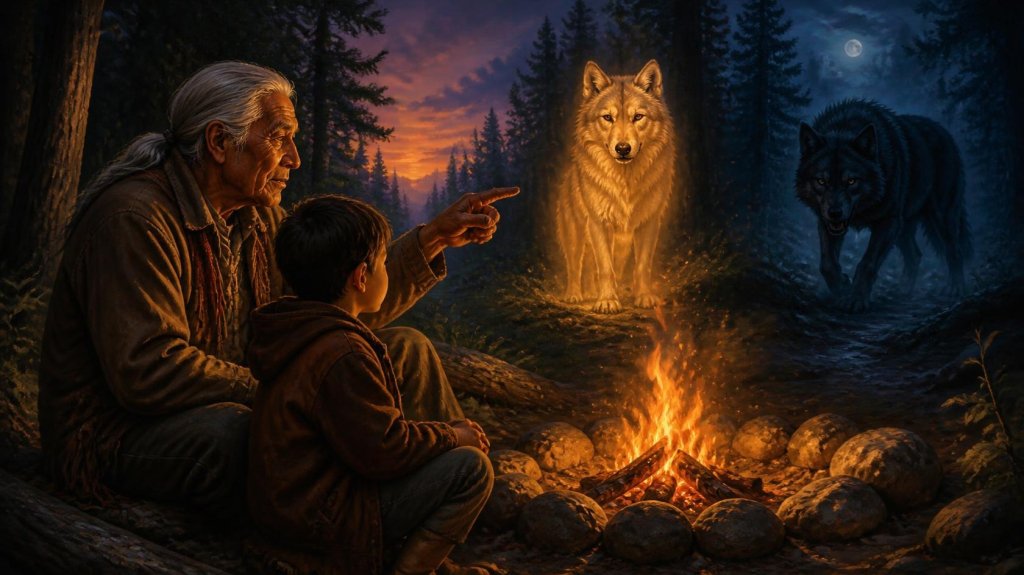
An elderly Cherokee man teaches his grandson about life: “A battle is going on inside me,” he told the child. “It is a terrible battle; it is a fight between two wolves. One is evil—he represents anger, envy, sorrow, regret, greed, arrogance, self-pity, guilt, resentment, inferiority, lies, false pride, a sense of superiority, and ego.” He continued: “The other is good—he represents joy, peace, love, hope, serenity, humility, kindness, benevolence, compassion, generosity, truth, empathy, and faith. This same battle is taking place inside you, and inside every other person as well.”
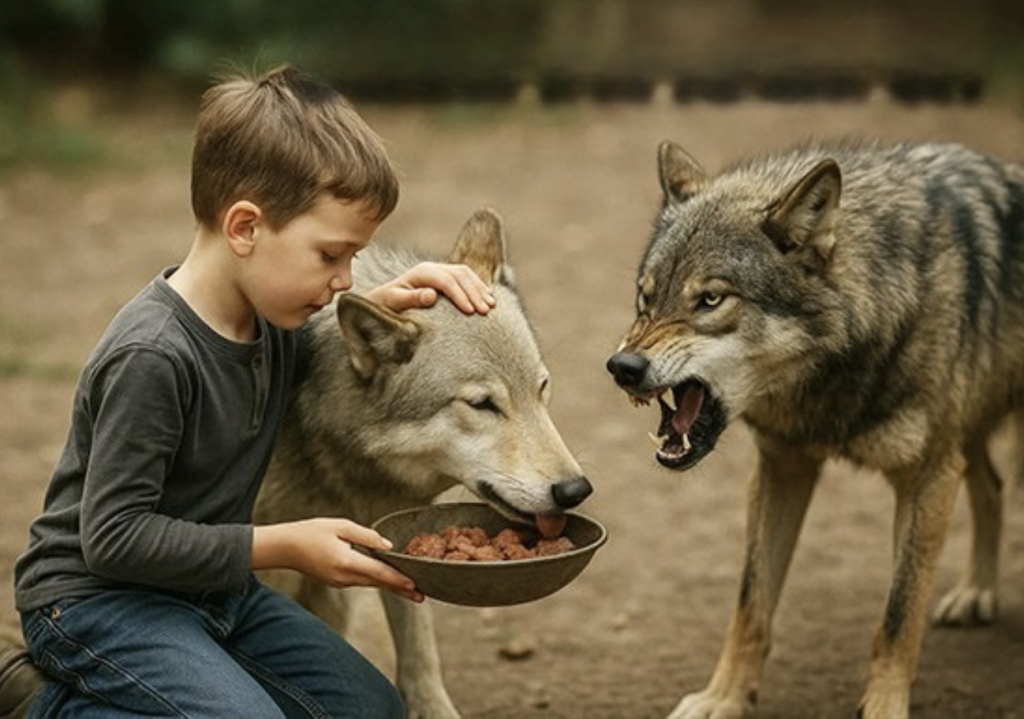
The grandson thought about this for a moment and asked his grandfather: “Who wins in the end? Which of those two wolves wins?” The elderly Cherokee replied, “If you feed both of them properly, both will win. You see, if I choose to feed only the white wolf, the black wolf will lurk in every dark corner. Waiting for a moment when my attention wavers or I grow weak, he will strike suddenly to claim the attention he craves. He is constantly angry and will perpetually fight the white wolf. But if I acknowledge him, he becomes happy, and the white wolf becomes happy too; then we all win. The black wolf possesses qualities—such as tenacity, courage, fearlessness, fierce determination, and brilliant strategic thinking—that the white wolf lacks, but I sometimes need. Yet, the white wolf possesses compassion, care, strength, and the ability to recognize what is best for everyone.
“Son, the white wolf needs the black wolf right by his side.” If you feed only one… If you do, the other will starve, and the situation will become uncontrollable. By nourishing and caring for both, you ensure that they serve you well and do nothing contrary to what is noble, good, or aligned with your life’s purpose. Nourish them both; otherwise, an internal struggle will arise between opposing forces vying for your attention—” either starve one or the other, or guide both onto the right path.”
What does this mean for our daily lives?
The message is simple yet profound: We are not helplessly at the mercy of our inner demons and negative thoughts. We have a choice.
Every time you…
… spend hours getting upset over something,
… compare yourself to others and feel envious,
… or expect the absolute worst,
… you feed the black wolf. It grows stronger and louder, eventually dominating your thoughts and actions.
If, on the other hand, you feed the white wolf through conscious gratitude, small acts of kindness, forgiveness, and optimistic thinking, it gains strength. Inner peace becomes a habit.
The battle between the two wolves never truly ends as long as we live. It’s not about completely killing the black wolf—because fears and doubts are often natural warning signs.
This inner struggle is not a sign of weakness. It is our psyche’s warning system. It shows us that what is demanded of us from the outside is no longer in harmony with our inner compass.
To resolve this conflict, we must have the courage to pause and reflect.
Become the observer
You are not the good wolf, nor are you the bad wolf. Because you are the grandfather observing them. You cannot simply kill or banish the difficult wolf. Instead, you accept that both wolves exist within you, but you use your core values to choose which wolf dictates your final actions. By feeding both, they no longer fight for your attention. They both serve you, creating internal harmony rather than a perpetual inner war.
See the video on YouTube
See also >Self Awareness; A Story About The Grass Eating Tiger








Leave A Comment